
Tired of a Wart That Hurts Every Time You Step?
Did a stubborn bump on the bottom of your foot survive every drugstore remedy? Plantar warts are common and rarely dangerous, but they can make each step feel like you’re walking on a pebble. If you’re searching for a podiatrist near me for wart removal, the team at The Metroplex Foot and Ankle, LLP treats plantar warts at our Richardson, Dallas and Garland, TX offices. We use prescription treatments, cryotherapy, laser therapy and minor in-office procedures to clear warts and help keep them from coming back.
Request an AppointmentWhat Are Plantar Warts?
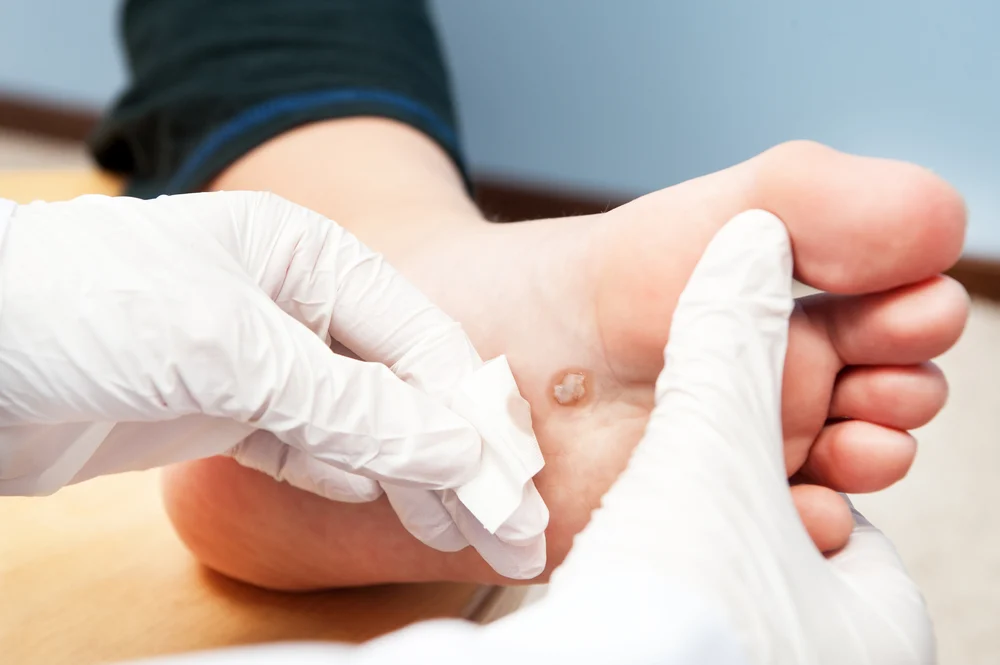
Plantar warts are small, rough growths on the soles of the feet. They’re caused by certain strains of the human papillomavirus (HPV). They usually form on weight-bearing areas such as the heel or the ball of the foot near the toes. Pressure from walking can push them inward, so a plantar wart often looks flat and sits under a layer of thickened skin.
The virus enters through tiny cuts, cracks or soft spots in the skin. There are more than 100 types of HPV, but only a few cause warts on the feet. Not everyone exposed to the virus develops a wart. Some people’s immune systems simply fight it off better than others.
How Can I Tell if It’s a Wart or a Callus?
Plantar warts and calluses can look alike, and that’s why many people treat the wrong problem at home. Here are the main differences:
- Warts interrupt the normal lines and ridges of your skin. Calluses follow them.
- Warts often show tiny black dots, sometimes called “seeds.” These are small clotted blood vessels.
- Warts usually hurt more when squeezed from the sides. Calluses hurt more with direct pressure.
- Several warts can cluster together into a larger patch called a mosaic wart.
If you aren’t sure what you’re looking at, our podiatrists can tell you quickly. You can learn more about thickened skin on our corns and calluses page.
What Symptoms Do Plantar Warts Cause?
Some plantar warts cause no symptoms at all. Others can be very painful, especially when you walk, run or stand for long periods. Many patients change the way they walk to protect the sore spot, which can lead to new foot pain in the arch, heel or toes. A wart that bleeds, changes color or spreads quickly should always be checked by a podiatrist.
How Do Podiatrists Treat Plantar Warts?
Many warts eventually go away on their own, but that can take months or even years. In that time they can spread to other parts of your foot or to other people. Over-the-counter salicylic acid products help some people. Never cut, shave or pick at a wart, because that can spread the virus and cause infection.
When home care isn’t working, your podiatrist examines the wart and recommends the treatment that fits its size, location and your health history. Options include:
- Prescription-strength topical medication to break down wart tissue faster than store-bought products
- Cryotherapy, which freezes the wart so the tissue dies and falls off
- Laser therapy, which targets the blood vessels that feed the wart
- Minor surgical removal for large or stubborn warts, done in the office with local anesthetic
Plantar warts often need more than one visit before they’re gone for good. For a closer look at each option, read our article on how podiatrists remove plantar warts. If minor surgery is the best choice, our board-certified foot surgeons do the procedure.
Who Should Never Treat a Wart at Home?
If you have diabetes, poor circulation or numbness in your feet, skip the drugstore acids and see a podiatrist first. Strong wart medications can damage healthy skin, and a small irritation can turn into a wound that is slow to heal. Our diabetic foot care and wound care services are built to protect high-risk feet. Patients with peripheral neuropathy should be especially careful.
How Can I Prevent Plantar Warts?
HPV thrives in warm, damp places. You can lower your risk with a few simple habits:
- Wear sandals or shower shoes in locker rooms, gyms, public showers and on pool decks.
- Keep your feet clean and dry, and change damp socks promptly.
- Don’t share towels, shoes or nail tools.
- Cover any existing wart so it doesn’t spread.
- Moisturize to prevent cracked heels, which give the virus an easy way in.
The same habits help prevent other skin and nail infections, such as athlete’s foot and fungal nails.
Where Can I Find Wart Treatment Near Me?
The Metroplex Foot and Ankle, LLP treats plantar warts at three conveniently located offices: our Richardson office, our Dallas office in Wadley Tower and our Garland office. We also see patients from nearby communities, including Plano, Mesquite and Rowlett. Meet our providers, review our insurance information or see the full list of podiatry services we offer.
Common Questions About Plantar Warts
Are plantar warts contagious?
Yes. Plantar warts are caused by HPV, which can spread through direct contact or through shared surfaces like shower floors, pool decks and gym mats. Wearing shower shoes in public areas and not sharing towels or footwear helps lower the risk.
Will a plantar wart go away on its own?
Many plantar warts eventually clear without treatment, but it can take months or even a couple of years. During that time the wart may grow, spread or become painful, so many patients choose professional treatment to speed things up.
What is the fastest way to get rid of a plantar wart?
Podiatrist treatments such as cryotherapy, laser therapy, prescription medication or minor in-office removal usually work faster than over-the-counter products. The best option depends on the wart’s size and location and on your overall health.
Does wart removal hurt?
Most patients feel only mild discomfort. Cryotherapy can sting briefly, and if minor surgery is needed, we numb the area with local anesthetic first. Soreness afterward is usually manageable with rest and simple pain relievers.
How many treatments will I need?
Some warts clear after one visit, but many need two or more treatments spaced a few weeks apart. Your podiatrist will check your progress at each visit and adjust the plan if the wart is slow to respond.
Can I treat a plantar wart at home if I have diabetes?
No. People with diabetes, poor circulation or numb feet should avoid over-the-counter wart acids and home removal. These products can damage healthy skin and lead to wounds that heal slowly. See a podiatrist for safe treatment.
Where can I get plantar wart treatment in the Dallas area?
The Metroplex Foot and Ankle, LLP treats plantar warts at offices in Richardson, Dallas and Garland, TX. Call the location nearest you or book online to schedule a visit.
Ready to Walk Without That Painful Bump?
You don’t have to wait months for a plantar wart to fade on its own. Our podiatrists in Richardson, Dallas and Garland can find the right treatment for your wart and help you get back on your feet comfortably. Call the office nearest you or request an appointment online today.